Saturday, September 25, 2021

Being Happy

A few days ago, while staying in a hotel, I saw someone create a scene during breakfast over something that was done not right. Over the next few days, I observed the hotel staff providing them with a special treatment, likely to placate them. 

Coincidentally, something similar had happened to me as well, but I didn't complain. In fact, I didn't even tell anyone about it. I started thinking if I should have done the same to get that special treatment, perhaps some extra perks or an upgrade.

Then the thought came in that it would have been a bad tradeoff, even from a purely selfish point of view. Habits (or sanskar) don't distinguish place. If you allow yourself to be upset, offended or miserable in one environment, you are training yourself to in other areas of your life as well -- with your loved ones and with yourself as well. 

In a world that tends to reward people for not being happy -- the hospitality industry focusing on the most difficult clients, eompoyers raising salaries for employees who are interviewing elsewhere, and companies offering promos to unhappy customers -- it is revolutionary to be happy.

As a corollary, to be a great leader, you should focus on the happy users/employees/customers just as much, if not more. 

Wednesday, April 8, 2020

Sri Ramachandrashtakam | श्रीरामचन्द्राष्टकम्


I attended this aarti a while ago at the Sankat Mochan Temple at the Mount Madonna, and have ever since wanted to transcribe it. I have been procrastinating for a while, but today, on the Hanuman Jayanti, finally decided to do this!

Here is my transcription from the text available in the temple, which I found was simpler than what is available elsewhere. I have also attached the screenshot of the text available there.


॥ श्रीरामचन्द्राष्टकम् ॥ 

ॐ चिदाकारो धाता परमसुखदः पावनतनुर्
मुनीन्द्रै र्योगीन्द्रै: यति पति सुरेन्द्रै: हनुमता । 
सदा सेव्यः पूर्णो जनकतनयाङ्गः सुरगुरू
रमानाथो रामो रमतु मम चित्ते तु सततम् ॥ १॥

मुकुन्दो गोविन्दो जनक-तनया-लालित-पदः 
पदं प्राप्ता यस्याधम-कुल-भवा चापि शबरी ।
गिरातीतोऽगम्यो विमलधिषणै: वेद वचसा
रमानाथो रामो रमतु मम चित्ते तु सततम् ॥ २॥

धराधीशोऽधीशः सुर नर वराणां रघुपतिः
किरीटी केयूरी कनक-कपिशः शोभित वपुः ।
समासीनः पीठे रविशतनिभे शान्त मनसो
रमानाथो रामो रमतु मम चित्ते तु सततम् ॥ ३॥

वरेण्यः शारण्यः कपि पति सखश्चान्त विधुरो
ललाटे काश्मीरो रुचिर गति भङ्गः शशिमुखः ।
नराकारो रामो यति पति तनु: संसृति हरो
रमानाथो रामो रमतु मम चित्ते तु सततम् ॥ ४॥

विरूपाक्षः काश्यामुपदिशति यन्नाम शिवदं
सहस्रं यन्नाम्नां पठति गिरिजा प्रत्युषसि वै ।
स्वलोके गायन्तीश्वर विधिमुखा यस्य चरितं
रमानाथो रामो रमतु मम चित्ते तु सततम् ॥ ५॥

परो धीरोऽधीरोऽसुरकुल भवश्च असुरहरः
परात्मा सर्वज्ञो नर  सुरगणौर:  गीत सुयशाः ।
अहल्या शापघ्नं शरकर ऋजुः कौशिक सखो
रमानाथो रामो रमतु मम चित्ते तु सततम् ॥ ६॥

हृषीकेशः शौरि: धरणी धरशायी मधुरिपु:
उपेन्द्रो वैकुण्ठो गजरिपुहरस तुष्टमनसा । 
बलिध्वंसी वीरो दशरथ सुतो नीति निपुणो
रमानाथो रामो रमतु मम चित्ते तु सततम् ॥ ७॥

कविः सौमित्रीड्यः कपट मृग घाती वनचरो
रणश्लाघी दान्तो धरणि भरहर्ता सुरनुतः ।
अमानी मानज्ञो निखिल जन पूज्यो हृदिशयो 
रमानाथो रामो रमतु मम चित्ते तु सततम् ॥ ८॥

 इदं रामस्तोत्रं वरममरदासेन रचितम् 
उषःकाले भक्त्या यदि पठति यो भावसहितम् ।
मनुष्यः स क्षिप्रं जनिमृतिभयं तापजनकं
परित्यज्य श्रीष्ठं रघुपतिपदं याति शिवदम् ॥ ९॥ 

॥ इति श्रीमद्रामदासपूज्यपादशिष्यश्रीमद्धं सदासशिष्येणामरदासाख्यकविना विरचितं श्रीरामचन्द्राष्टकं समाप्तम् ॥ 


Meaning
I have been able to find the meaning of only the first para. Please let me know if you find the translation of the rest.

जो ज्ञानस्वरूप हैं, जगत्का धारण-पोषण करनेवाले हैं, परमसुखके दाता हैं, जिनका शरीर सबको पवित्र करनेवाला है,
मुनीन्द्र, योगीन्द्र, यतीश्वर, देवश्वर और हनुमान् जिनकी सदा सेवा करते हैं
जो पूर्ण हैं, सीताजी जिनकी अर्द्धाङ्गिनी हैं; जो देवताओकें भी गुरु हैं,
वे लक्ष्मीपति भगवान् श्रीरामचन्द्रजी मेरे चित्तमें सदा रमण करें।

Friday, July 12, 2019

Excerpts from "Man's Search for Meaning"


Between stimulus and response, there is a space. In that space is our power to choose our response. In our response lies our growth and our freedom.


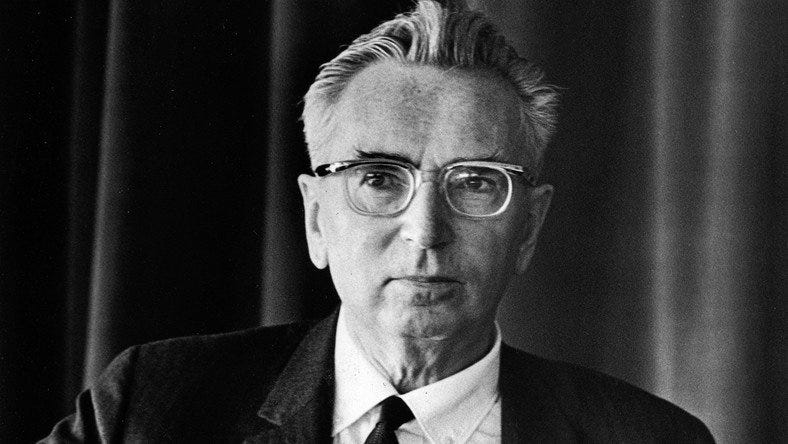
Viktor Frankl was an Austrian neurologist and psychiatrist as well as a Holocaust survivor. He survived Theresienstadt, Auschwitz, Kaufering and Türkheim for over 3 years. Frankl was the founder of logotherapy, which is a form of existential analysis, the "Third Viennese School of Psychotherapy". During the concentration camps, he was forced to practice his own therapy to endure the trials and tribulations of daily life.

In this blog, I am presenting some of the excerpts from the second section of his book, "Man's Search for Meaning" where he describes logotherapy. The first section was the autobiography of his life during the camp.


The Will to Meaning
Man’s search for meaning is the primary motivation in his life and not a “secondary rationalization” of instinctual drives. This meaning is unique and specific in that it must and can be fulfilled by him alone; only then does it achieve a significance which will satisfy his own will to meaning. There is much wisdom in the words of Nietzsche: “He who has a why to live for can bear almost any how.”


Noö-Dynamics
To be sure, man’s search for meaning may arouse inner tension rather than inner equilibrium. However, precisely such tension is an indispensable prerequisite of mental health.  What man actually needs is not a tensionless state but rather the striving and struggling for a worthwhile goal, a freely chosen task. What he needs is not the discharge of tension at any cost but the call of a potential meaning waiting to be fulɹlled by him.

So, if therapists wish to foster their patients’ mental health, they should not be afraid to create a sound amount of tension through a reorientation toward the meaning of one’s life.


The Existential Vacuum
The existential vacuum is a widespread phenomenon of the twentieth century. It manifests itself mainly in a state of boredom. Now we can understand Schopenhauer when he said that mankind was apparently doomed to vacillate eternally between the two extremes of distress and boredom. In actual fact, boredom is now causing, and certainly bringing to psychiatrists, more problems to solve than distress.

Let us consider, for instance, “Sunday neurosis,” that kind of depression which affects people who become aware of the lack of content in their lives when the rush of the busy week is over and the void within themselves becomes manifest. Not a few cases of suicide can be traced back to this existential vacuum. Such widespread phenomena as depression, aggression and addiction are not understandable unless we recognize the existential vacuum underlying them. This is also true of the crises of pensioners and aging people.

Moreover, there are various masks and guises under which the existential vacuum appears. Sometimes the frustrated will to meaning is vicariously compensated for by a will to power, including the most primitive form of the will to power, the will to money. In other cases, the place of frustrated will to meaning is taken by the will to pleasure. That is why existential frustration often eventuates in sexual compensation. We can observe in such cases that the sexual libido becomes rampant in the existential vacuum.


The Meaning of Life
I doubt whether a doctor can answer this question in general terms. For the meaning of life differs from man to man, from day to day and from hour to hour. What matters, therefore, is not the meaning of life in general but rather the specific meaning of a person’s life at a given moment.

As each situation in life represents a challenge to man and presents a problem for him to solve, the question of the meaning of life may actually be reversed. Ultimately, a man should not ask what the meaning of his life is, but rather he must recognize that it is he who is asked. In a word, each man is questioned by life; and he can only answer to life by answering for his own life; to life he can only respond by being responsible. Thus, logotherapy sees in responsibleness the very essence of human existence.


The Essence of Existence
This emphasis on responsibleness is rejected in the categorical imperative of logotherapy, which is: “Live as if you were living already for the second time and as if you had acted the first time as wrongly as you are about to act now!” It seems to me that there is nothing which would stimulate a man’s sense of responsibleness more than this maxim, which invites him to imagine first that the present is past and, second, that the past may yet be changed and amended. Such a precept confronts him with life’s finiteness as well as the finality of what he makes out of both his life and himself.

By declaring that man is responsible and must actualize the potential meaning of his life, I wish to stress that the true meaning of life is to be discovered in the world rather than within man or his own psyche, as though it were a closed system. I have termed this constitutive characteristic “the self-transcendence of human existence.” It denotes the fact that being human always points, and is directed, to something, or someone, other than oneself—be it a meaning to fulfill or another human being to encounter. The more one forgets himself—by giving himself to a cause to serve or another person to love—the more human he is and the more he actualizes himself. What is called self-actualization is not an attainable aim at all, for the simple reason that the more one would strive for it, the more he would miss it. In other words, self-actualization is possible only as a side-effect of self- transcendence.

We can discover this meaning in life in three different ways: (1) by creating a work or doing a deed; (2) by experiencing something or encountering someone; and (3) by the attitude we take toward unavoidable suffering. The first, the way of achievement or accomplishment, is quite obvious. The second and third need further elaboration. The second way of finding a meaning in life is by experiencing something—such as goodness, truth and beauty—by experiencing nature and culture or, last but not least, by experiencing another human being in his very uniqueness—by loving him.


The Meaning of Love
Love is the only way to grasp another human being in the innermost core of his personality. No one can become fully aware of the very essence of another human being unless he loves him. By his love he is enabled to see the essential traits and features in the beloved person; and even more, he sees that which is potential in him, which is not yet actualized but yet ought to be actualized. Furthermore, by his love, the loving person enables the beloved person to actualize these potentialities. By making him aware of what he can be and of what he should become, he makes these potentialities come true.

The third way of finding a meaning in life is by suffering.


The Meaning of Suffering
We must never forget that we may also find meaning in life even when confronted with a hopeless situation, when facing a fate that cannot be changed. For what then matters is to bear witness to the uniquely human potential at its best, which is to transform a personal tragedy into a triumph, to turn one’s predicament into a human achievement. When we are no longer able to change a situation—just think of an incurable disease such as inoperable cancer—we are challenged to change ourselves.

Let me cite a clear-cut example: Once, an elderly general practitioner consulted me because of his severe depression. He could not overcome the loss of his wife who had died two years before and whom he had loved above all else. Now, how could I help him? What should I tell him? Well, I refrained from telling him anything but instead confronted him with the question, “What would have happened, Doctor, if you had died first, and your wife would have had to survive you?” “Oh,” he said, “for her, this would have been terrible; how she would have suffered!” Whereupon I replied, “You see, Doctor, such a suffering has been spared her, and it was you who have spared her this suffering—to be sure, at the price that now you have to survive and mourn her.” He said no word but shook my hand and calmly left my office. In some way, suffering ceases to be suffering at the moment it finds a meaning, such as the meaning of a sacrifice.

Of course, this was no therapy in the proper sense since, first, his despair was no disease; and second, I could not change his fate; I could not revive his wife. But in that moment I did succeed in changing his attitude toward his unalterable fate inasmuch as from that time on he could at least see a meaning in his suffering. It is one of the basic tenets of logotherapy that man’s main concern is not to gain pleasure or to avoid pain but rather to see a meaning in his life. That is why man is even ready to suffer, on the condition, to be sure, that his suffering has a meaning.

But let me make it perfectly clear that in no way is suffering necessary to find meaning. I only insist that meaning is possible even in spite of suffering—provided, certainly, that the suffering is unavoidable. If it were avoidable, however, the meaningful thing to do would be to remove its cause, be it psychological, biological or political. To suffer unnecessarily is masochistic rather than heroic.

“our current mental-hygiene philosophy stresses the idea that people ought to be happy, that unhappiness is a symptom of maladjustment. Such a value system might be responsible for the fact that the burden of unavoidable unhappiness is increased by unhappiness about being unhappy.”


There are situations in which one is cut off from the opportunity to do one’s work or to enjoy one’s life; but what never can be ruled out is the unavoidability of suffering. In accepting this challenge to suffer bravely, life has a meaning up to the last moment, and it retains this meaning literally to the end. In other words, life’s meaning is an unconditional one, for it even includes the potential meaning of unavoidable suffering.

In the concentration camp, I remember, it seemed to me that I would die in the near future. In this critical situation, however, my concern was different from that of most of my comrades. Their question was, “Will we survive the camp? For, if not, all this suffering has no meaning.” The question which beset me was, “Has all this suffering, this dying around us, a meaning? For, if not, then ultimately there is no meaning to survival; for a life whose meaning depends upon such a happenstance—as whether one escapes or not—ultimately would not be worth living at all.”


Looking back from the deathbed
Viewing one's life as if from one's own deathbed, one can suddenly see a meaning in it, a meaning which even included all of one's sufferings.


The Super-Meaning
This ultimate meaning necessarily exceeds and surpasses the finite intellectual capacities of man; in logotherapy, we speak in this context of a super-meaning. What is demanded of man is not, as some existential philosophers teach, to endure the meaninglessness of life, but rather to bear his incapacity to grasp its unconditional meaningfulness in rational terms. Logos (meaning) is deeper than logic.


Paradoxical Intent
Pleasure is, and must remain, a side-effect or by-product, and is destroyed and spoiled to the degree to which it is made a goal in itself.

Logotherapy bases its technique called “paradoxical intention” on the twofold fact that fear brings about that which one is afraid of, and that hyper-intention makes impossible what one wishes. In this approach, the phobic patient is invited to intend, even if only for a moment, precisely that which he fears.

Let me recall a case. A young physician consulted me because of his fear of perspiring. Whenever he expected an outbreak of perspiration, this anticipatory anxiety was enough to precipitate excessive sweating. In order to cut this circle formation, I advised the patient, in the event that sweating should recur, to resolve deliberately to show people how much he could sweat. A week later he returned to report that whenever he met anyone who triggered his anticipatory anxiety, he said to himself, “I only sweated out a quart before, but now I’m going to pour at least ten quarts!” The result was that, after suffering from his phobia for four years, he was able, after a single session, to free himself permanently of it within one week.

Paradoxical intention can also be applied in cases of sleep disturbance. The fear of sleeplessness results in a hyper-intention to fall asleep, which, in turn, incapacitates the patient to do so. To overcome this particular fear, I usually advise the patient not to try to sleep but rather to try to do just the opposite, that is, to stay awake as long as possible. In other words, the hyper-intention to fall asleep, arising from the anticipatory anxiety of not being able to do so, must be replaced by the paradoxical intention not to fall asleep, which soon will be followed by sleep. Paradoxical intention is no panacea. Yet it lends itself as a useful tool in treating obsessive-compulsive and phobic conditions, especially in cases with underlying anticipatory anxiety.

The reader will note that this procedure consists of a reversal of the patient’s attitude, inasmuch as his fear is replaced by a paradoxical wish. By this treatment, the wind is taken out of the sails of the anxiety.

Such a procedure, however, must make use of the specifically human capacity for self-detachment inherent in a sense of humor. This basic capacity to detach one from oneself is actualized whenever the logotherapeutic technique called paradoxical intention is applied.


On Freedom
Man is not fully conditioned and determined but rather determines himself whether he gives in to conditions or stands up to them. In other words, man is ultimately self-determining. Man does not simply exist but always decides what his existence will be, what he will become in the next moment.

One of the main features of human existence is the capacity to rise above such conditions, to grow beyond them. Man is capable of changing the world for the better if possible, and of changing himself for the better if necessary. 

Freedom, however, is not the last word. Freedom is only part of the story and half of the truth. Freedom is but the negative aspect of the whole phenomenon whose positive aspect is responsibleness. In fact, freedom is in danger of degenerating into mere arbitrariness unless it is lived in terms of responsibleness. That is why I recommend that the Statue of Liberty on the East Coast be supplemented by a Statue of Responsibility on the West Coast.


The case for a Tragic Optimism
“A tragic optimism” means that one is, and remains, optimistic in spite of the “tragic triad,” as it is called in logotherapy, a triad which consists of those aspects of human existence which may be circumscribed by: (1) pain; (2) guilt; and (3) death. This chapter, in fact, raises the question, How is it possible to say yes to life in spite of all that? How, to pose the question differently, can life retain its potential meaning in spite of its tragic aspects? After all, “saying yes to life in spite of everything,” presupposes that life is potentially meaningful under any conditions, even those which are most miserable. And this in turn presupposes the human capacity to creatively turn life’s negative aspects into something positive or constructive. In other words, what matters is to make the best of any given situation. “The best,” however, is that which in Latin is called optimum—hence the reason I speak of a tragic optimism, that is, an optimism in the face of tragedy and in view of the human potential which at its best always allows for: (1) turning suffering into a human achievement and accomplishment; (2) deriving from guilt the opportunity to change oneself for the better; and (3) deriving from life’s transitoriness an incentive to take responsible action.

It must be kept in mind, however, that optimism is not anything to be commanded or ordered. One cannot even force oneself to be optimistic indiscriminately, against all odds, against all hope. And what is true for hope is also true for the other two components of the triad inasmuch as faith and love cannot be commanded or ordered either.

To the European, it is a characteristic of the American culture that, again and again, one is commanded and ordered to “be happy.” But happiness cannot be pursued; it must ensue. One must have a reason to “be happy.” Once the reason is found, however, one becomes happy automatically. As we see, a human being is not one in pursuit of happiness but rather in search of a reason to become happy, last but not least, through actualizing the potential meaning inherent and dormant in a given situation.

This need for a reason is similar in another specifically human phenomenon—laughter. If you want anyone to laugh you have to provide him with a reason, e.g., you have to tell him a joke. In no way is it possible to evoke real laughter by urging him, or having him urge himself, to laugh. Doing so would be the same as urging people posed in front of a camera to say “cheese,” only to find that in the finished photographs their faces are frozen in artificial smiles.


Friday, November 9, 2018

On Festivals and Fasting - A letter from Seneca


Today, I came across a letter written by Seneca from a podcast I was reading about. It's sort of mindblowing that today we have access to the intimate writing of such giants at the click of a button! Anyway, I have recently become a fan of Seneca, and immediately knew I had to take notes. Here are they:

Seneca is writing this letter to his friend Lucilius "On Festivals and Fasting" in December when the entire Roman kingdom is submerged in the holiday exuberance.


  • It shows much more courage to remain dry and sober when the mob is drunk and vomiting; but it shows greater self-control to refuse to withdraw oneself and to do what the crowd does, but in a different way, – thus neither making oneself conspicuous nor becoming one of the crowd. For one may keep holiday without extravagance.
  • Voluntary hardships: I am so firmly determined, however, to test the constancy of your mind that, I shall give you also a lesson: Set aside a certain number of days, during which you shall be content with the scantiest and cheapest fare, with coarse and rough dress, saying to yourself the while: "Is this the condition that I feared?".
  • From the podcast, "Find some things that are hard, even if it’s just skipping the elevator and taking the stairs up to the 15th floor or whatever. If the other people are not doing it, then that’s probably a sign that it’s something that you should do and just record your results; see how much better it makes you feel and then just keep pushing yourself a bit further. Voluntary hardship is a fantastic way to short-circuit hedonic adaptation, where you need more and more and more, almost like an opiate to satisfy your need for x."
  • It is precisely in times of immunity from care that the soul should toughen itself beforehand for occasions of greater stress, and it is while Fortune is kind that it should fortify itself against her violence. In days of peace, the soldier performs maneuvers, throws up earthworks with no enemy in sight, and wearies himself by gratuitous toil, in order that he may be equal to unavoidable toil.
  • You need not suppose that I mean meals like Timon's, or "paupers' huts,"[5] or any other device which luxurious millionaires use to beguile the tedium of their lives. Let the pallet be a real one, and the coarse cloak; let the bread be hard and grimy. Endure all this for three or four days at a time, sometimes for more, so that it may be a test of yourself instead of a mere hobby. Then, I assure you, my dear Lucilius, you will leap for joy when filled with a pennyworth of food, and you will understand that a man's peace of mind does not depend upon Fortune; for, even when angry she grants enough for our needs. [Importance of pilgrimage in many religions].
  • There is no reason, however, why you should think that you are doing anything great; for you will merely be doing what many thousands of slaves and many thousands of poor men are doing every day. But you may credit yourself with this item, – that you will not be doing it under compulsion, and that it will be as easy for you to endure it permanently as to make the experiment from time to time.
  • Let us practise our strokes on the "dummy";let us become intimate with poverty, so that Fortune may not catch us off our guard. We shall be rich with all the more comfort, if we once learn how far poverty is from being a burden.
  • Even Epicurus, the teacher of pleasure, used to observe stated intervals, during which he satisfied his hunger in niggardly fashion; he wished to see whether he thereby fell short of full and complete happiness, and, if so, by what amount he fell short, and whether this amount was worth purchasing at the price of great effort.
  • He alone is in kinship with God who has scorned wealth. Of course I do not forbid you to possess it, but I would have you reach the point at which you possess it dauntlessly; this can be accomplished only by persuading yourself that you can live happily without it as well as with it, and by regarding riches always as likely to elude you.
  • Ungoverned anger begets madness. It makes no difference how important the provocation may be, but into what kind of soul it penetrates. Similarly with fire; it does not matter how great is the flame, but what it falls upon. For solid timbers have repelled a very great fire; conversely, dry and easily inflammable stuff nourishes the slightest spark into a conflagration.

Sunday, September 2, 2018

Summary of "Nonviolent Communication: A Language of Life"


Reading the "Nonviolent Communication: A Language of Life" book by Marshall B. Rosenberg was on the top of my list for a while. Google used to conduct courses on it which were highly rated and many friends had recommended the book as well. I finally got to reading this and I am glad I did. Although I don't agree with everything in the book and am not convinced that the approach can be applied as is all the time, I still think that the core ideas are worth heeding and implementing as much as possible. Even just being aware of these ideas can bring a great difference in how we think and communicate. In fact, as I write this summary, I can already see improvement in my quality of conversations! I rate the book highly and one of those which I would like to re-read periodically.

The book explores how peaceful communication can create compassionate connections in personal and professional settings and uses stories and dialogues to provide solutions to communication problems. Guidance is provided on identifying and articulating feelings and needs, expressing anger fully, and exploring the power of empathy in order to speak honestly without creating hostility, break patterns of thinking that lead to anger and depression, and communicate compassionately.

Here is my summary of the sections I found important in the book. I would definitely recommend everyone to read this book.

1. The NVC Process


Four components of NVC:
  1. Observation: what are we observing others saying or doing that is affecting us? The trick is to be able to articulate this observation without introducing any judgment or evaluation—to simply say what people are doing that we either like or don’t like.
  2. Feeling: we state how we feel when we observe this action: are we hurt, scared, joyful, amused, irritated, etc.?
  3. Needs: we say what needs of ours are connected to the feelings we have identified.
  4. Request: what we are wanting from the other person that would enrich our lives.
E.g. a mother might express these three pieces to her teenage son by saying, “Felix, when I see two balls of soiled socks under the coffee table and another three next to the TV, I feel irritated because I am needing more order in the rooms that we share in common.” She would follow immediately with the fourth component—a very specific request: “Would you be willing to put your socks in your room or in the washing machine?” 

Thus, part of NVC is to express these four pieces of information very clearly, whether verbally or by other means. The other aspect of this communication consists of receiving the same four pieces of information from others. We connect with them by first sensing what they are observing, feeling, and needing, and then discover what would enrich their lives by receiving the fourth piece, their request.

It is possible to experience all four pieces of the process without uttering a single word. The essence of NVC is to be found in our consciousness of these four components, not in the actual words that are exchanged.

My summary of NVC:
  • What happened?
  • How did it make me feel?
  • Why did it make me feel that way?
  • What could be done to change it?
By going through this process we are able to break the stimuli-response chain.

Author's experience

I was presenting Nonviolent Communication in a mosque at Deheisha Refugee Camp in Bethlehem to about 170 Palestinian Moslem men. Attitudes toward Americans at that time were not favorable. As I was speaking, I suddenly noticed a wave of muffled commotion fluttering through the audience. “They’re whispering that you are American!” my translator alerted me, just as a gentleman in the audience leapt to his feet. Facing me squarely, he hollered at the top of his lungs, “Murderer!” Immediately a dozen other voices joined him in chorus: “Assassin!” “Child-killer!” “Murderer!” Fortunately, I was able to focus my attention on what the man was feeling and needing. In this case, I had some cues. On the way into the refugee camp, I had seen several empty tear gas canisters that had been shot into the camp the night before. Clearly marked on each canister were the words “Made in U.S.A.” I knew that the refugees harbored a lot of anger toward the U.S. for supplying tear gas and other weapons to Israel. I addressed the man who had called me a murderer:
I: Are you angry because you would like my government to use its resources differently? (I didn’t know whether my guess was correct, but what is critical is my sincere effort to connect with his feeling and need.)
He: Damn right I’m angry! You think we need tear gas? We need sewers, not your tear gas! We need housing! We need to have our own country!
I: So you’re furious and would appreciate some support in improving your living conditions and gaining political independence?
He: Do you know what it’s like to live here for twenty seven years the way I have with my family—children and all? Have you got the faintest idea what that’s been like for us?
I: Sounds like you’re feeling very desperate and you’re wondering whether I or anybody else can really understand what it’s like to be living under these conditions. Am I hearing you right?
He: You want to understand? Tell me, do you have children? Do they go to school? Do they have playgrounds? My son is sick! He plays in open sewage! His classroom has no books! Have you seen a school that has no books?
I: I hear how painful it is for you to raise your children here; you’d like me to know that what you want is what all parents want for their children—a good education, opportunity to play and grow in a healthy environment . . .
He: That’s right, the basics! Human rights—isn’t that what you Americans call it? Why don’t more of you come here and see what kind of human rights you’re bringing here!
I: You’d like more Americans to be aware of the enormity of the suffering here and to look more deeply at the consequences of our political actions? 
Our dialogue continued, with him expressing his pain for nearly twenty more minutes, and I listen for the feeling and need behind each statement. I didn’t agree or disagree. I received his words, not as attacks, but as gifts from a fellow human willing to share his soul and deep vulnerabilities with me. Once the gentleman felt understood, he was able to hear me as I explained my purpose for being at the camp. An hour later, the same man who had called me a murderer was inviting me to his home for a Ramadan dinner.


2. Communication That Blocks Compassion


Being compassionate is our natural state. Certain ways of communicating alienate us from it.

Moralistic Judgments
“Out beyond ideas of wrongdoing and rightdoing, there is a field. I’ll meet you there.” - Rumi
  • Moralistic judgments that imply wrongness on the part of people who don’t act in harmony with our values. 
  • Such judgments are reflected in the language such as, “The problem with you is that you’re too selfish.” “She’s lazy.” “They’re prejudiced.” “It’s inappropriate.” Blame, insults, put-downs, labels, criticism, comparisons, and diagnoses are all forms of judgment. 
  • When we speak this language, we think and communicate in terms of what’s wrong with others for behaving in certain ways, or occasionally, what’s wrong with ourselves for not understanding or responding as we would like. Our attention is focused on classifying, analyzing, and determining levels of wrongness rather than on what we and others need and not getting. Thus if my partner wants more affection than I’m giving her, she is “needy and dependent.” But if I want more affection than she is giving me, then she is “aloof and insensitive.” 
  • It is my belief that all such analyses of other human beings are tragic expressions of our own values and needs. They are tragic because, when we express our values and needs in this form, we increase defensiveness and resistance to them among the very people whose behaviors are of concern to us. Or, if they do agree to act in harmony with our values not because they concur with our analysis of their wrongness, they will likely do so out of fear, guilt, or shame.
  • We all pay dearly when people respond to our values and needs, not out of a desire to give from the heart, but out of fear, guilt, or shame. Sooner or later, we will experience the consequences of diminished goodwill on the part of those who comply with our values out of a sense of either external or internal coercion. They, too, pay emotionally, for they are likely to feel resentment and decreased self-esteem when they respond to us out of fear, guilt, or shame. Furthermore, each time others associate us in their minds with any of those feelings, we decrease the likelihood of their responding compassionately to our needs and values in the future.
  • It is important here not to confuse value judgments and moralistic judgments. All of us make value judgments as to the qualities we value in life; for example, we might value honesty, freedom, or peace. Value judgments reflect our beliefs of how life can best be served. We make moralistic judgments of people and behaviors that fail to support our value judgments, e.g. “Violence is bad. People who kill others are evil.” Had we been raised speaking a language that facilitated the expression of compassion, we would have learned to articulate our needs and values directly, rather than to insinuate wrongness when they have not been met. For example, instead of “Violence is bad,” we might say instead, “I am fearful of the use of violence to resolve conflicts; I value the resolution of human conflicts through other means.” 
  • A researcher took random samples of pieces of literature from many countries over the world and tabulated the frequency of words that classify and judge people. His study shows a high correlation between the frequent use of such words and incidences of violence. It does not surprise me to hear that there is considerably less violence in cultures where people think in terms of human needs than in cultures where people label one another as “good” or “bad” and believe that the “bad” ones deserve to be punished.
  • At the root of much, if not all, violence—whether verbal, psychological, or physical, whether among family members, tribes, or nations—is a kind of thinking that attributes the cause of conflict to wrongness in one’s adversaries, and a corresponding inability to think of oneself or others in terms of vulnerability—what one might be feeling, fearing, yearning for, missing, etc.
  • Comparisons are a form of judgment.

Open questions/meta-points

  • Aren't there some values that are universal? Wouldn't not valuing them be bad.
  • Nikhil mentioned that labeling can be non-violent also if we are aware of the reason behind it. E.g. we might label someone as violent, but if we are aware that they are so because of the situations they went through as a child, we probably would still be kind to them.

Denial Of Responsibility

"The horrors that we have seen, the still greater horrors we shall presently see, are not signs that rebels, insubordinate, untamable men are increasing in number throughout the world, but rather that there is a constant increase in the number of obedient, docile men." - George Bernanos
  • We are dangerous when we are not conscious of our responsibility for how we behave, think, and feel.
  • The lack of responsibility in our language can lead us to cause great violence (physical, mental etc). E.g.
    • “I cleaned my room because I had to.” -- results in resentment
    • “I hit my child because he ran into the street.” -- blaming on the actions of others
    • “I lied to the client because the boss told me to.” -- blaming on the actions of others
    • “I started smoking because all my friends did.” -- blaming on the actions of others
    • “I hate giving grades. I don’t think they are helpful and they create a lot of anxiety on the part of students. But I have to give grades: it’s the district policy.” vs “I choose to give grades because I want to keep my job.”. This results in much less resentment.
My summary: The core idea here is recognizing that the stimulus is often inside and not outside. E.g. I hit the child because I was angry, not because he ran into the street. Only when we take responsibility for our actions, then can we change them.

Communicating desires as demands

  • A demand explicitly or implicitly threatens listeners with blame or punishment if they fail to comply.
  • Demand-led actions lead to retaliation.


3. NVC Step 1: Observing Without Evaluating

“The ability to observe without evaluating is the highest form of intelligence.” - Jiddu Krishnamurti
  • The first component of NVC entails the separation of observation from evaluation. We need to clearly observe what we are seeing, hearing, or touching that is affecting our sense of well-being, without mixing in any evaluation.
  • When we combine observation with evaluation, however, we decrease the likelihood that others will hear our intended message.
  • NVC does not mandate that we remain completely objective and refrain from evaluating. It only requires that we maintain a separation between our observations and our evaluations. NVC is a process language that discourages static generalizations; instead, evaluations are to be based on observations specific to time and context.
  • For most of us, this objective separation is difficult.

Distinguishing Observations From Evaluations


Author's experience 
During a workshop I was conducting, someone raised a hand and declared, “You’re the most arrogant speaker we’ve ever had!” 
MBR: (guessing at the observations he was making) Are you reacting to my having taken 30 straight minutes to present my views before giving you a chance to talk?
Phil: No, you make it sound so simple.
MBR: (trying to obtain further clarification) Are you reacting to my not having said anything about how the process can be difficult for some people to apply?
Phil: No, not some people—you!
MBR: So you’re reacting to my not having said that the process can be difficult for me at times?
Phil: That’s right.
MBR: Are you feeling annoyed because you would have liked some sign from me that indicated that I have some problems with the process myself?
Phil: (after a moment’s pause) That’s right.
MBR: (More relaxed now that I am in touch with the person’s feeling and need, I direct my attention to what he might be requesting of me) Would you like me to admit right now that this process can be a struggle for me to apply?
Phil: Yes.
MBR: (Having gotten clear on his observation, feeling, need, and request, I check inside myself to see if I am willing to do as he requests) Yes, this process is often difficult for me. As we continue with the workshop, you’ll probably hear me describe several incidents where I’ve struggled . . . or completely lost touch . . . with this process, this consciousness, that I am presenting here to you. But what keeps me in the struggle are the close connections to other people that happen when I do stay with the process.

My summary: Without specific observations, past biases tend to obscure the reality and any downstream actions are then in ignorance.


4. NVC Step 2: Identifying and Expressing Feelings

The Heavy Cost Of Unexpressed Feelings

  • Our repertoire of words for calling people names is often larger than our vocabulary of words that allow us to clearly describe our emotional states.
  • The difficulty in identifying and expressing feelings is common, and in my experience, especially so among lawyers, engineers, police officers, corporate managers, and career military personnel—people whose professional codes discourage them from manifesting emotions.
  • One dissatisfied woman brought her spouse to a workshop, during which she told him, “I feel like I’m married to a wall.” The husband then did an excellent imitation of a wall: he sat mute and immobile. Exasperated, she turned to me and exclaimed, “See! This is what happens all the time. He sits and says nothing. It’s just like living with a wall.” “It sounds to me like you are feeling lonely and wanting more emotional contact with your husband,” I responded. When she agreed, I tried to show how statements such as “I feel like I’m living with a wall” are unlikely to bring her feelings and desires to her husband’s attention. In fact, they are more likely to be heard as criticism than an invitation to connect with our feelings. Furthermore, such statements often lead to self-fulfilling prophecies. A husband, for example, hears himself criticized for behaving like a wall; he is hurt and discouraged and doesn’t respond, thereby confirming his wife’s image of him as a wall.
  • Allowing ourselves to be vulnerable by expressing our feelings can help resolve conflicts. 
  • NVC distinguishes the expression of actual feelings from words and statements that describe thoughts, assessments, and interpretations.
  • A vocabulary of feelings can help in their expression (link).

My summary: Identifying feelings is important as without that it's hard to find what is causing it e.g. what need is being unmet.


5. NVC Step 3: Taking Responsibility For Our Feelings

“People are disturbed not by things, but by the view they take of them.” —Epictetus

Hearing A Negative Message: Four Options

  • What others do may be the stimulus of our feelings, but not the cause.
  • Our feelings result from how we choose to receive what others say and do, as well as our particular needs and expectations in that moment.
  • Four options of receiving a negative message.
    • Blaming ourselves: We accept the other person’s judgment and blame ourselves resulting in guilt, shame, and depression.
    • Blaming others: Results in anger.
    • Sensing our own feelings and needs: For example, in response to “You’re the most self-centered person I’ve ever met,” we might reply, “When I hear you saying that I am the most self-centered person you’ve ever met, I feel hurt, because I need some recognition of my efforts to be considerate of your preferences.” By focusing attention on our own feelings and needs, we become conscious that our current feeling of hurt derives from a need for our efforts to be recognized.
    • Sensing others’ feelings and needs: We might, for example, ask, “Are you feeling hurt because you need more consideration for your preferences?”
  • The basic mechanism of motivating by guilt is to attribute the responsibility for one’s own feelings to others. E.g. when parents say, “It hurts Mommy and Daddy when you get poor grades at school”.
  • We can deepen our awareness of our own responsibility by using the phrase, “I feel . . . because I . . . ” 
We accept responsibility rather than blame other people for our feelings by acknowledging our own needs, desires, expectations, values, or thoughts. Note the difference between the following expressions of disappointment:

A: “You disappointed me by not coming over last evening.”
B: “I was disappointed when you didn’t come over because I wanted to talk over some things.”
Speaker A attributes responsibility for the disappointment solely to the action of the other person. In B, the feeling of disappointment is traced to the speaker’s own desire that was not being fulfilled. 

Example 2
A: “Their canceling the contract really irritated me!”
B: “When they canceled the contract, I felt really irritated because I was hoping for an opportunity to re-hire the workers we had laid off last year.”

The Needs At The Roots Of Feelings
  • Judgments, criticisms, diagnoses, and interpretations of others are all alienated expressions of our needs.
  • “You never understand me,” they are really telling us that their need to be understood is not being fulfilled. 
  • We are accustomed to thinking about what’s wrong with other people when our needs aren’t being fulfilled. 
  • When we express our needs indirectly through the use of evaluations, interpretations, and images, others are likely to hear criticism resulting in self-defense or counterattack.
  • If we express our needs, we have a better chance of getting them met.
  • List of basic human needs.

From Emotional Slavery To Emotional Liberation

In the course of developing emotional responsibility, most of us experience three stages:
  1. “emotional slavery”—believing ourselves responsible for the feelings of others, 
  2. “the obnoxious stage”—in which we refuse to admit to caring what anyone else feels or needs, and 
  3. “emotional liberation”—in which we accept full responsibility for our own feelings but not the feelings of others while being aware that we can never meet our own needs at the expense of others.

My summary: Blame the need, not the person. This would make you more compassionate towards the person. This also helps avoid the other person to become defensive or counter-attacking and thus results in better reaching a solution.


6. NVC Step 4: Requesting That Which Would Enrich Life

  • Use positive language. Express what you want, not what you don't.
  • Avoid vague, abstract, or ambiguous phrasing.
  • Word the requests in the form of concrete actions that others can undertake.
  • Expressing needs concretely can also help the request maker see if their requests are unjustified. E.g. A father wanted his son to be more responsible, but when asked to express this more concretely, it turned out he wanted sleepish obedience which he himself found incorrect.
  • People are often depressed when their needs are not being met. The most common reason for their needs being unmet is not that others are failing to meet them but they themselves don't know what they want and hence, don't ask for their needs. 
  • Whenever we say something to another person, we are requesting something in return.
  • Group meetings often waste time on fruitless discussions. When someone brings up a topic/story, members should ask, "What response are we wanting from the group from this?".
  • Requests are received as demands when others believe they will be blamed or punished if they do not comply. When people hear us make a demand, they see only two options: submission or rebellion. Either way, the person requesting is perceived as coercive, and the listener’s capacity to respond compassionately to the request is diminished. Both listener and requester carry this to future relations.
  • How to tell if it’s a demand or a request: Observe what the speaker does if the request is not complied with. If the response of noncompliance is punishment, judgment or guilt-trap, it's not a request.
  • The more we interpret noncompliance as rejection, the more likely our requests will be heard as demands. This leads to a self-fulfilling prophecy, for the more people hear demands, the less they enjoy being around us.
  • We can help others trust that we are requesting, not demanding, by indicating that we would only want the person to comply if he or she can do so willingly. Thus we might ask, “Would you be willing to set the table?” rather than “I would like you to set the table.” 
  • The most powerful way to communicate that we are making a genuine request is to empathize with people when they don’t respond to the request. Choosing to request rather than demand does not mean we give up when someone says “no” to our request. It does mean that we don’t engage in persuasion until we have empathized with what’s preventing the other person from saying “yes.”
  • The NVC process is designed for those of us who would like others to change and respond, but only if they choose to do so willingly and compassionately. This is difficult especially for parents, teachers, managers, and others whose work centers around influencing people and obtaining behavioral results.
  • When we occupy positions of authority and are speaking with those who have had past experiences with coercive authority figures, they might perceive our genuine requests as demands as well.
  • When making a request, it is also helpful to scan our minds for thoughts of the following sort that automatically transform requests into demands: • He should be cleaning up after himself. • She’s supposed to do what I ask. • I deserve to get a raise. • I’m justified in having them stay later. • I have a right to more time off. When we frame our needs in this way, we are bound to judge others when they don’t do as we request.
  • Since the message we send is not always the message that’s received, we need to learn how to find out if our message has been accurately heard. Paraphrasing or asking them to repeat what they heard us say can help.

My summary: By requesting specifically, we can become aware and honest about what we want and it also helps the other person understands what they could do. I spent some moments wondering what's wrong with "He should be cleaning up after himself". My conclusion is that he may not value cleaning. If I value, then I should let them know of my needs.


7. Receiving Empathically

 “Don’t just do something, stand there.” - Buddhist saying.
  • Empathy occurs only when we have successfully shed all preconceived ideas and judgments about someone.
  • We tend to have a strong urge to give advice or reassurance and to explain our own position or feeling. Empathy, on the other hand, requires focusing full attention on the other person’s message.
  • Common behaviors that prevent us from connecting empathically:
    • Advising: “I think you should . . . ” “How come you didn’t . . . ?”
    • One-upping: “That’s nothing; wait till you hear what happened to ....”
    • Consoling: “It wasn’t your fault; you did the best you could.”
    • Story-telling: “That reminds me of the time . . . ”
    • Shutting down: “Cheer up. Don’t feel so bad.”
    • Sympathizing: “Oh, you poor thing . . . ”
    • Interrogating: “When did this begin?”
    • Explaining: “I would have called but . . . ”
    • Correcting: “That’s not how it happened.”
  • Believing we have to “fix” situations and make others feel better prevents us from being present.
  • Questions such as, “When did this begin?” block the kind of presence that empathy requires. When we are thinking about people’s words, listening to how they connect to our theories, we are looking at people—we are not with them.
  • In empathy, we are wholly present with the other party and what they are experiencing. This quality of presence distinguishes empathy from either mental understanding or sympathy. While we may choose at times to sympathize with others by feeling their feelings, it’s helpful to be aware that during the moment we are offering sympathy, we are not empathizing.
  • You’ll find people to be less threatening if you hear what they’re needing rather than what they’re thinking about you.
  • Time and again I have witnessed people transcending the paralyzing effects of psychological pain when they have sufficient contact with someone who can hear them empathically -- the author has used empathetic listening to cure many patients with acute psychological disorders.

Paraphrasing

  • Speakers expressing intensely emotional messages would appreciate our reflecting these back to them. E.g. to "I'm depressed." responding with, "Oh, so you are depressed.".
  • Paraphrasing tends to save, rather than waste, time. Studies in labor-management negotiations demonstrate that the time required to reach conflict resolution is cut in half when each negotiator agrees, before responding, to accurately repeat what the previous speaker had said.
  • My note: From my past experience, in arguments, repeating what other person said helps. Often, either we don't listen to what they said and here our own story or they might have said something without realizing. Paraphrasing helps clarify things and prevents unnecessary escalations.
Example:
Wife: “You never listen to me.”
Husband: “I do” he replied.
Wife: “No, you don’t,” she countered.
vs
Wife: “You never listen to me.”
Husband: “It sounds like you’re terribly frustrated because you would like to feel more connection when we speak.” 

Sustaining Empathy

  • Allow others the opportunity to fully express themselves before turning our attention to solutions or requests for relief. 
  • When we proceed too quickly to what people might be requesting, we may not convey our genuine interest in their feelings and needs; instead, they may get the impression that we’re in a hurry to either be free of them or to fix their problem.
  • By maintaining our attention on what’s going on within others, we offer them a chance to fully explore and express their interior selves. We would stem this flow if we were to shift attention too quickly either to their request or to our own desire to express ourselves.
  • We know the speaker has received adequate empathy when a. we sense a release of tension or b. the flow of words comes to a halt. 
  • By listening to what’s going on in ourselves with the same quality of presence and attention that we offer to others, we can provide ourselves with empathy.

My summary: Empathy helps us get in touch with the feelings and needs of the other person. Empathy is being without doing.


8. Connecting Compassionately With Ourselves

"Let us become the change we seek in the world." —Mahatma Gandhi
  • When we are internally violent towards ourselves, it is difficult to be genuinely compassionate towards others. Hence, the most crucial application of NVC is in the way we treat ourselves.
  • We were not meant to succumb to the dictates of “should” and “have to,” whether they come from outside or inside of ourselves. And if we do yield and submit to these demands, our actions arise from an energy that is devoid of life-giving joy.
  • Self-judgments, like all judgments, are tragic expressions of unmet needs. By self judgement, what we are saying is, “I myself am not behaving in harmony with my own needs.”
  • NVC mourning: connecting with the feelings and unmet needs stimulated by past actions which we now regret. We see how our behavior ran counter to our own needs and values, and we open ourselves to feelings that arise out of that awareness. 
  • When our consciousness is focused on what we need, we are naturally stimulated towards the creative possibilities of how to get that need met. In contrast, the moralistic judgments we use when blaming ourselves tend to obscure such possibilities and to perpetuate a state of self-punishment. 
  • NVC self-forgiveness: connecting with the need we were trying to meet when we took the action which we now regret.
  • An important aspect of self-compassion is to be able to empathically hold both parts of ourselves—the self that regrets a past action and the self that took the action in the first place. The process of mourning and self-forgiveness free us in the direction of learning and growing. In connecting moment by moment to our needs, we increase our creative capacity to act in harmony with them.

Translating “Have to” To “Choose to”
  • Whenever you feel like, "I have to do X " convert it to “I choose to do X because I want Y.” Then,
    • if you are not convinced that Y merits the frustration/cost of X, don't do it.
    • Otherwise do it wholeheartedly. This way you are empowering yourself and getting to a resolution.
  • E.g. "I have to spend so much time driving kids to school every day." vs 
    • "I choose to drive kids to school every day because the schools nearby are not good and I really value their education." and then doing it without complaints
    • or "I choose to drive kids to school every day because I want to save some money." and then deciding not doing this and hiring someone to do this.
  • This helps us identify our true motivators and makes us responsible for them. Have-to puts it on someone else.
  • Common motivators: money, the approval of others, fear, shame, guilt or duty.
  • The most dangerous of all behaviors is the duty. Because of this, Nazi officers committed so many atrocities without a second thought.


9. Expressing Anger Fully

  • Killing, hitting, blaming, hurting others—whether physically or mentally—are all superficial expressions of what is going on within us when we are angry.
  • What other people do is never the cause, but a stimulus, of how we feel.
  • Cause of anger is judging or blaming the other person for being wrong or deserving of punishment.
  • When we are connected to our need, we may have strong feelings, but we are never angry.
  • Judgments of others contribute to self-fulfilling prophecies.

Steps to expressing anger
  1. Stop: Breathe and refrain from making any move to blame or punish
  2. Identify our judgmental thoughts. 
  3. Connect with the unmet needs behind these thoughts.
  4. Offer empathy if possible: Ask the other person, “Are you feeling . . . ?” to understand their story.
  5. Express our feelings and unmet needs.


10. The Protective Use Of Force

  • In some situations, we may need to resort to force. For instance, the other party may be unwilling to communicate, or imminent danger may not allow time for communication. 
  • NVC requires us to differentiate between the protective and the punitive uses of force. The intention behind the protective use of force is to prevent injury or injustice. The intention behind the punitive use of force is to cause individuals to suffer for their perceived misdeeds.
  • When we submit to doing something solely for the purpose of avoiding punishment, our attention is distracted from the value of the action itself.
  • Punishment is costly in terms of goodwill. The more we are seen as agents of punishment, the harder it is for others to respond compassionately to our needs.

Corporal punishment in Children
  • Children’s fear of corporal punishment may obscure their awareness of the compassion that underlies parental demands.
  • On countless occasions, children turn against what might be good for them simply because they choose to fight, rather than succumb, to coercion.
  • When parents opt to use force they are we perpetuating a social norm that justifies violence as a means of resolving differences.
  • In addition to the physical, other uses of force also qualify as punishment. E.g. labeling the child, withholding of some means of gratification, threatening to withdraw caring or respect.
  • Two questions help us see why we are unlikely to get what we want by using punishment to change people’s behavior:
    1. What do I want this person to do?
    2. What do I want this person’s reasons to be for doing it?
  • Punishment and reward interfere with people’s ability to do things motivated by the reasons we’d like them to have. 
My summary: Force (physical, emotional) can at best help in the short term and at worst can have adverse effects in the long term. Force hampers communication.


11. Expressing Appreciation In Nonviolent Communication

  • Compliments are often judgments—however positive—of others. E.g. “You are really smart.”
  • Modern psychology recommends using positive feedback as a means to influence others. However, the recipients of such praise do change behavior, but only initially. Once they sense the manipulation behind the appreciation, they go back to where they were or become even worse.
  • The NVC approach: Express appreciation as a way to celebrate, not to manipulate.
  • Saying “thank you” in NVC: “This is what you did; this is what I feel; this is the need of mine that was met.” The order doesn't matter.
  • Receving appreciation is done in a similar manner. 
  • Usually, appreciation is received from one of two polar positions. At one end is egotism: believing ourselves to be superior because we’ve been appreciated. At the other extreme is false humility, denying the importance of the appreciation by shrugging it off: “Oh, it was nothing.” We could receive appreciation joyfully, in the awareness that God has given everyone the power to enrich the lives of others. If we are aware that it is this power of God working through us that gives us the power to enrich life for others, then we may avoid both the ego trap and the false humility.
  • Almost everyone is hungry for appreciation. Even when people are embarrassed, they still want to hear appreciation verbalized.


12. My notes: Open questions/criticism

  • The language the book recommends sounds way too formal for a normal conversation. That limits its application. This might have worked for the author as he is a psychologist but I doubt it would work for the rest. E.g. it would be ridiculous to say something like this, "I’d like you to tell me if you would be willing to postpone our meeting for one week." vs "Would you be willing to postpone our meeting for one week?". 
  • Also, some NVC dialogues can get too complicated to understand. E.g. “would you be willing to tell me how I could have let you know what I was wanting so that it wouldn’t sound like I was bossing you around?”
  • Downsides of empathy: https://www.quora.com/What-are-the-downsides-of-empathy-1 


Thanks for reading this far! If you managed till here, I would strongly recommend you read the book as apart from the theory, the book also has a lot of sample dialogues. Also, if you have any thoughts on the topics above, I would love to hear them. Please feel free to share them below. Lastly, check out the NVC website for the resources.

Sunday, August 5, 2018

The Psychology of Human Misjudgment by Charlie Munger - Part 2

This is the part two and the final one of my summary of the chapter from "Poor Charlie's Almanack" where Munger describes psychology-based tendencies that, while sometimes useful to us, can often mislead. If we are aware of these, we will do better in life.

The part one could be found here.


Deprival Superreaction Tendency
  • The quantity of man’s pleasure from a ten dollar gain does not exactly match the quantity of his displeasure from a ten-dollar loss. That is, the loss seems to hurt much more than the gain seems to help. Moreover; if a man almost gets something he greatly wants and has it jerked away from him at the last moment, he will react much as if he had long owned the reward and had it jerked away.
  • In displaying Deprival Superreaction Tendency, man frequently incurs disadvantage by misframing his problems. He will often compare what is near instead of what really matters. For instance, a man with $10 million in his brokerage account will often be extremely irritated by the accidental loss of $100 out of the $300 in his wallet.
  • A man ordinarily reacts with irrational intensity to even a small loss, or threatened loss, of property, love, friendship, dominated territory, opportunity, status, or any other valued thing. As a natural result, bureaucratic infighting over the threatened loss of dominated territory often causes immense damage to an institution or as a whole. This factor among others accounts for much of the wisdom of Jack Welch‘s long fight against bureaucratic ills at General Electric.
  • Deprival Superreaction Tendency often protects ideological or religious views by triggering a hatred directed toward vocal nonbelievers.
  • It is almost everywhere the case that extremes of ideology are maintained with great intensity and with great antipathy to non-believers, causing extremes of cognitive dysfunction. This happens, I believe, because two psychological tendencies are usually acting concurrently towards this same sad result: Inconsistency-Avoidance Tendency, plus Deprival Superreaction Tendency.
  • Antidotes to intense, deliberate maintenance of groupthink: 
    1. An extreme culture of courtesy, kept in place despite ideological differences
    2. To deliberately bring in able and articulate disbelievers of incumbent groupthink.
  • Labor, once paid a certain wage, can't let it be reduced even if it means the closing of the business which is the worse outcome for them.
  • The most addictive forms of gambling provide a lot of near misses and each one triggers Deprival Superreaction Tendency. Electronic machines enable the creators to produce a lot of meaningless bar-bar-lemon results that greatly increase play by fools who think they have very nearly won large rewards.
  • Deprival Superreaction Tendency often does much damage to man in open-outcry auctions. The social proof that we will next consider tends to convince man that the last price from another bidder was reasonable, and then Deprival Superreaction Tendency prompts him strongly to top the last bid. The best antidote to being thus triggered into paying foolish prices at open-outcry auctions is the simple Buffett practice: Don’t go to such auctions.


Social-Proof Tendency
  • It's wiser for parents to rely more on manipulating the quality of the peers of their kids than on exhortations to them to correct their behavior.
  • Triggering of Social-Proof Tendency most readily occurs in the presence of puzzlement or stress, and particularly when both exist.
  • Because both bad and good behaviors are made contagious by Social-Proof Tendency, it is highly important that human societies stop any bad behavior before it spreads and foster and display all good behavior.
  • Inaction by others can also become social proof [ref Bystander effect].
  • Summary: Learn how to ignore the examples from others when they are wrong, because few skills are more worth having.


Contrast-Misreaction Tendency 
  • The contrast in what is seen is registered in the brain.
  • Few psychological tendencies do more damage to correct thinking.
  • Small-scale damages involve instances such as man’s buying an overpriced $1,000 leather dashboard merely because the price is so low compared to his concurrent purchase of a $65,000 car.
  • Large-scale damages often ruin lives, as when a wonderful woman having terrible parents marries a man who would be judged satisfactory only in comparison to her parents.
  • A particularly reprehensible form of sales practice occurs in the offices of some real estate brokers. A buyer from out of the city visits the office with little time available. The salesman deliberately shows the customer three awful houses at ridiculously high prices. Then he shows him a merely bad house at a price only moderately too high. And, boom, the broker often makes an easy sale.


Stress-Influence Tendency
  • Sudden stress, for instance from a threat, will cause a rush of adrenaline in the human body, prompting a faster and more extreme reaction.
  • Light stress can slightly improve performance – say, in examinations – whereas heavy stress causes dysfunction.
  • During the great Leningrad Flood of the 1920s, Pavlov had many dogs in cages. Their habits had been transformed, by a combination of his “Pavlovian conditioning” plus standard reward responses, into distinct and different patterns. As the waters of the flood came up and receded, many dogs reached a point where they had almost no airspace between their noses and the tops of their cages. This subjected them to maximum stress. Immediately thereafter, Pavlov noticed that many of the dogs were no longer behaving as they had. For example, the dog that formerly had liked his trainer now disliked him. This result reminds one of the modern cognition-reversals in which a person’s love of his parents suddenly becomes hate, as new love has been shifted suddenly to a cult. The unanticipated, extreme changes in Pavlov’s dogs would have driven any good experimental scientist into a near-frenzy of curiosity. That was indeed Pavlov’s reaction. Pavlov spent the rest of his long life giving stress-induced nervous breakdowns to dogs, after which he would try to reverse the breakdowns, all the while keeping careful experimental records. He found: 
    1. that he could classify dogs so as to predict how easily a particular dog would breakdown; 
    2. that the dogs hardest to break down were also the hardest to return to their pre-breakdown state; 
    3. that any dog could be broken down; 
    4. and that he couldn’t reverse a breakdown except by reimposing stress.


Availability-Misweighing Tendency 
  • Man’s imperfect, limited-capacity brain easily drifts into working with what’s easily available to it, and the brain can’t use what it can’t remember or what it is blocked from recognizing. 
  • The main antidotes to avoid Availability-Misweighing Tendency often involve procedures, including use of checklists, which are almost always helpful.
  • Extra-vivid evidence, being so memorable and thus more available in cognition, should often consciously be under weighed while less vivid evidence should be overweighed.


Authority-Misinfluence Tendency
  • Humans have the natural tendency to follow leaders.
  • Man is often destined to suffer greatly when the leader is wrong or when his leader’s ideas don’t get through properly.
  • In the simulator training of copilots, they have to learn to ignore certain really foolish orders from boss pilots because boss pilots will sometimes err disastrously. Even after going through such a training regime, however, copilots in simulator exercises will too often allow the simulated plane to crash because of some extreme and perfectly obvious simulated error of the chief pilot.
  • Summary: be careful whom you appoint to power because a dominant authority figure will often be hard to remove, aided as they will be by Authority-Misinfluence Tendency.


Reason-Respecting Tendency
  • Human cognition has the natural tendency of complying when given reasoning.
  • This is sometimes abused by giving bogus reasons.

Thursday, August 2, 2018

The Psychology of Human Misjudgment by Charlie Munger - Part 1

This is the part one of my summary of the chapter from "Poor Charlie's Almanack" where Munger describes psychology-based tendencies that, while sometimes useful to us, can often mislead. If we are aware of these, we will do better in life.


Reward and Punishment Super Response Tendency
  • Incentives are very powerful. When FedEx wanted to make it's nighttime operations faster, they tried everything but nothing seemed to work. Finally, they decided to stop paying the employees by the hour and paid by shift, so that the could go home early if they finished early and it worked.
  • "If you would persuade, appeal to interest and not to reason". 
  • Prompt rewards work much better in changing the behavior than the delayed ones in changing and maintaining behavior. This has led to improvement in autistic children.
  • Look out for incentive caused bias.
  • Points to keep in mind when dealing with a professional advisor:
    • Fear advise which is good for the advisor
    • Learn and use the basic elements of your advisor's trade
    • Double check, disbelieve or replace until it seems appropriate objectively
  • My corollary: Prioritize advisors who admit what they did wrong and are willing to admit their mistakes to help you.
  • Punishments also work similarly as rewards (in the opposite directions) but are not as great at habit changing.

Liking /Loving Tendency
  • We are genetically programmed to love/like.
  • This acts as a conditioning device that makes the liker/lover tend
    • to ignore the faults of, and comply with the wishes of the object of its affection.
    • to favor people, products, and actions merely associated with the object of his affection.
    • to distort other facts to facilitate love.

Disliking/Hating Tendency

  • The reverse of above.

Doubt-Avoidance Tendency
  • Evolutionarily, the brain is programmed to quickly remove doubt by reaching some decision.
  • This is triggered by a combination of puzzlement and stress.

Inconsistency-Avoidance Tendency

  • Evolutionarily, the brain is reluctant to change.
  • Thus, habits -- good or bad -- are hard to change once formed.
  • "An ounce of prevention is worth a pound of cure."
  • The same tendency is responsible for holding onto one's previous conclusions, human loyalties, reputational identity, etc.
  • A quickly reached conclusion, triggered by Doubt-Avoidance Tendency, when combined with a tendency to resist any change in that conclusion, will naturally cause a lot of errors in cognition for modern man.
  • Keynes pointed out that it was not the intrinsic difficulty of new ideas that prevented their acceptance, but because they were inconsistent with old ideas.
  • People are reluctant to change opinion even if there is plenty of opposing evidence.
  • One corollary of Inconsistency-Avoidance Tendency is that a person making big sacrifices in the course of assuming a new identity will intensify his devotion to the new identity. This is popularly on display in military and religion.
  • Ben Franklin wanted the approval of some important man, so he maneuvered that man into doing him some unimportant favor, like lending a book. Thereafter, the man would admire and trust Franklin more because a nonadmired and nontrusted Franklin would be inconsistent with the appraisal implicit in lending Franklin the book.
  • This works in reverse too. When one is maneuvered into deliberately hurting some other person, one will tend to disapprove or even hate that person.

Envy/Jealousy Tendency

  • The more we can relate to someone, the more we envy them. E.g. Sibling rivalry among Children is stronger than that is directed towards strangers.
  • Buffet: "It is not greed that drives the world, but envy."

Reciprocation Tendency
  • Humans, like many animals, have an extreme tendency to return both favors and disfavors.
  • The standard antidote to one’s overactive hostility is to train oneself to defer reaction. As my smart friend Tom Murphy so frequently says, ”You can always tell the man off tomorrow, if it is such a good idea.”
  • Wise employers try to oppose reciprocate-favor tendencies of employees engaged in purchasing. The simplest antidote works best: Don’t let them accept any favors from vendors. E.g. Sam Walton (Walmart founder) wouldn’t let purchasing agents accept so much as a hot dog from a vendor.
  • In a famous psychology experiment, Cialdini brilliantly demonstrated the power of “compliance practitioners” to mislead people by triggering their subconscious Reciprocation Tendency. Carrying out this experiment, Cialdini caused his “compliance practitioners” to wander around his campus and ask strangers to supervise a bunch of juvenile delinquents on a trip to a zoo. Because this happened on a campus, one person in six out of a large sample actually agreed to do this. After accumulating this one-in-six statistic, Cialdini changed his procedure. His practitioners next wandered around the campus asking strangers to devote a big chunk of time every week for two years to the supervision of juvenile delinquents. This ridiculous request got him a one hundred percent rejection rate. But the practitioner had a follow-up question: “Will you at least spend one afternoon taking juvenile delinquents to a zoo?” This raised Cialdini’s former acceptance rate of 1/6 to 1/2 – a tripling.
  • Guilt is caused by the conflict of reciprocation tendency and reward superresponse tendency.

Influence-from-Mere-Association Tendency
  • In this conditioned reflex, a mere association triggers a response. For instance, consider the case of many men who have been trained by their previous experience in life to believe that when several similar items are presented for purchase, the one with the highest price will have the highest quality. It worked wonderfully with high-priced power tools for a long time. And it would work better yet with high-speed pumps at the bottom of oil wells.
  • Similarly, military bands play such impressive music because the association of this impressive music with military service helps to attract soldiers and keep them in the army. 
  • Some of the most important miscalculations come from what is accidentally associated with one’s past success, or one’s liking and loving, or one’s disliking and hating which includes a natural hatred for bad news. For instance, a man foolishly gambles in a casino and yet wins. This unlikely correlation causes him to try the casino again.
  • The proper antidotes to being made such a patsy by past success are: 1. to carefully examine each past success, looking for accidental, non-causative factors associated with such success that will tend to mislead as one appraises odds implicit in a proposed new undertaking, and 2. to look for dangerous aspects of the new undertaking that were not present when past success occurred.
  • The damage to the mind can come from liking and loving.  We often see a strong misinfluence from love as tearful mothers, with heartfelt conviction, declare before TV cameras the innocence of their obviously guilty sons.
  • People disagree about how much blindness should accompany the association called love. In Poor Richard’s Almanack Franklin counseled: “Keep your eyes wide open before marriage and half shut thereafter.” Perhaps this “eyes-half-shut” solution is about right, but I favor a tougher prescription: “See it like it is and love anyway.”
  • Hating and disliking also cause miscalculation triggered by mere association. In business, people often under appraise both the competency and morals of competitors they dislike. This is a dangerous practice, usually disguised because it occurs on a subconscious basis.
  • Another common bad effect from the mere association of a person and a hated outcome is displayed in Persian Messenger Syndrome. Ancient Persians actually killed some messengers whose sole fault was that they brought home truthful bad news, say, of a battle lost. It was actually safer for the messenger to run away and hide, instead of doing his job, as a wiser boss would have wanted it done. Even today, it is actually dangerous in many careers to be a carrier of unwelcome news. Union negotiators and employer representatives often know this, and it leads to many tragedies in labor relations. Sometimes lawyers, knowing their clients will hate them if they recommend an unwelcome but wise settlement, will carry on to disaster.
  • The proper antidote to creating Persian Messenger Syndrome and its bad effects is to develop, through an exercise of will, a habit of welcoming bad news. At Berkshire, there is a common injunction: “Always tell us the bad news promptly. It is only the good news that can wait.” It also helps to be so wise and informed that people fear not telling you bad news because you are so likely to get it elsewhere.
  • Influence-from-Mere-Association Tendency often has a shocking effect that helps swamp the normal tendency to return favor for favor, especially when the favor recipient’s condition is unpleasant, due to poverty, sickness, subjugation, or something else. Sometimes, when one receives a favor, the favor may trigger an envy-driven dislike for the person who was in so favorable a state that he could easily be a favor giver. Under such circumstances, the favor-receiver, prompted partly by mere association of the favor-giver with past pain, will not only dislike the man who helped him but also try to injure him. This accounts for a famous response, sometimes dubiously attributed to Henry Ford: “Why does that man hate me so, I never did anything for him.”

Simple, Pain-Avoiding Psychological Denial
  • The reality is too painful to bear, so one distorts the facts until they become bearable. The tendency’s most extreme outcomes are usually mixed up with love, death, and chemical dependency.
  • “It is not necessary to hope in order to persevere.” -- there is something admirable in anyone able to do this.
  • One should stay far away from any conduct at all likely to drift into chemical dependency. Even a small chance of suffering so great a damage should be avoided.

Excessive Self-Regard Tendency
  • We all commonly observe the excessive self-regard of man. He mostly mis-appraises himself on the high side, like the ninety percent of Swedish drivers that judge themselves to be above average. Such misappraisals also apply to a person’s major “possessions.” One spouse usually over appraises the other spouse. And a man’s children are likewise appraised higher by him than they are likely to be in a more objective view. Even man’s minor possessions tend to be over appraised. Once owned, they suddenly become worth more to him than he would pay if they were offered for sale to him and he didn’t already own them. There is a name in psychology for this phenomenon: the “endowment effect.” And all man’s decisions are suddenly regarded by him as better than would have been the case just before he made them.
  • Man’s excess of self-regard typically makes him strongly prefer people like himself. Psychology professors have had much fun demonstrating this effect in “lost-wallet” experiments. Their experiments all show that the finder of a lost wallet containing identity clues will be most likely to return the wallet when the owner most closely resembles the finder. 
  • Some of the worst consequences in modern life come when dysfunctional groups of cliquish persons, dominated by Excessive Self-Regard Tendency, select as new members of their organizations, persons who are very much like themselves. Thus, if the English department at an elite university becomes mentally dysfunctional or the sales department of a brokerage firm slips into routine fraud, the problem will have a natural tendency to get worse and to be quite resistant to change for the better.
  • Therefore, some of the most useful members of our civilization are those who are willing to “clean house” when they find a mess under their ambit of control.
  • In lotteries, the play is much lower when numbers are distributed randomly than it is when the player picks his own number even though the odds are almost exactly the same and much against the player. Because state lotteries take advantage of man’s irrational love of self-picked numbers, modern man buys more lottery tickets than he otherwise would have, with each purchase foolish.
  • Excesses of self-regard often cause bad hiring decisions because employers grossly over appraise the worth of their own conclusions that rely on impressions in face-to-face contact. The correct antidote to this sort of folly is to under weigh face-to-face impressions and overweigh the applicant’s past record. "I once chose exactly this course of action while I served as chairman of an academic search committee. I convinced fellow committee members to stop all further interviews and simply appoint a person whose achievement record was much better than that of any other applicant. When it was suggested to me that I wasn’t giving “academic due process,” I replied that I was the one being true to academic values because I was using academic research showing the poor predictive value of impressions from face-to-face interviews."
  • There is a famous passage somewhere in Tolstoy that illuminates the power of Excessive Self-Regard Tendency. According to Tolstoy, the worst criminals don’t appraise themselves as all that bad. They come to believe either: 1. that they didn’t commit their crimes or 2. that, considering the pressures and disadvantages of their lives, it is understandable and forgivable that they behaved as they did and became what they became.
  • The second half of the “Tolstoy effect,” where the man makes excuses for his fixable poor performance, instead of providing the fix, is enormously important. Because a majority of mankind will try to get along by making way too many unreasonable excuses for fixable poor performance, it is very important to have personal and institutional antidotes limiting the ravages of such folly.
  • On the personal level, a man should try to face the two simple facts: 
    1. Fixable but unfixed bad performance is bad character and tends to create more of itself causing more damage to the excuse giver with each tolerated instance
    2. And in demanding places, like athletic teams and General Electric, you are almost sure to be discarded in due course if you keep giving excuses instead of behaving as you should.
  • The main institutional antidotes to this part of the “Tolstoy effect” are: offer meritocratic, demanding culture, plus personal handling methods that build up morale, and severance of the worst offenders.
  • When you can’t sever – as in the case of your own child – you must try to fix the child as best you can. I once heard of a child-teaching method so effective that the child remembered the learning experience over fifty years later. The child later became Dean of the USC School of Music and then related to me what his father said when he saw his child taking candy from the stock of his employer with the excuse that he intended to replace it later. The father said, “Son, it would be better for you to simply take all you want and call yourself a thief every time you do it.”
  • Summary: The best antidote to folly from an excess of self-regard is to force yourself to be more objective when you are thinking about yourself, your family and friends, your property, and the value of your past and future activity. This isn’t easy to do well and won’t work perfectly, but it will work much better than simply letting psychological nature take its normal course.
  • Some high self-appraisals are correct and serve better than false modesty. Moreover, self-regard in the form of a justified pride in a job well done, or a life well lived, is a large constructive force.
  • Of all forms of useful pride, perhaps the most desirable is a justified pride in being trustworthy. Moreover, the trustworthy man, even after allowing for the inconveniences of his chosen course, ordinarily has a life that averages out better than he would have if he provided less reliability.

Overoptimism Tendency
  • “What a man wishes, that also will he believe.” - Demosthenes
  • The Greek orator was clearly right about an excess of optimism being the normal human condition, even when pain or the threat of pain is absent. Just witness happy people buying lottery tickets or believing that credit-furbishing, delivery-making grocery stores were going to displace a great many superefficient cash-and-carry supermarkets.
  • One standard antidote to foolish optimism is trained, habitual use of the simple probability math of Fermat and Pascal, taught to high school sophomores. The mental rules of thumb that evolution gives you to deal with risk are not adequate.